English| USD
Suggested for you
More currencies
Choose a language
The Victoria Falls Bridge bungee jump has operated since 1993 with one documented serious incident. This page covers the verified accident history, the 2012 rope failure that made international headlines, and the safety protocols now in place at the 111-meter jump between Zambia and Zimbabwe.
Quick answer
The Victoria Falls bungee jump accident occurred on December 31, 2012, when a 22-year-old Australian woman's bungee cord detached mid-jump, causing her to fall into the Zambezi River below. She survived with a collapsed lung, broken collarbone, and leg injuries. This remains the only serious incident in the jump's three-decade operational history. The operator, Shearwater Adventures, has since implemented dual-redundancy harness systems and revised cord inspection protocols.
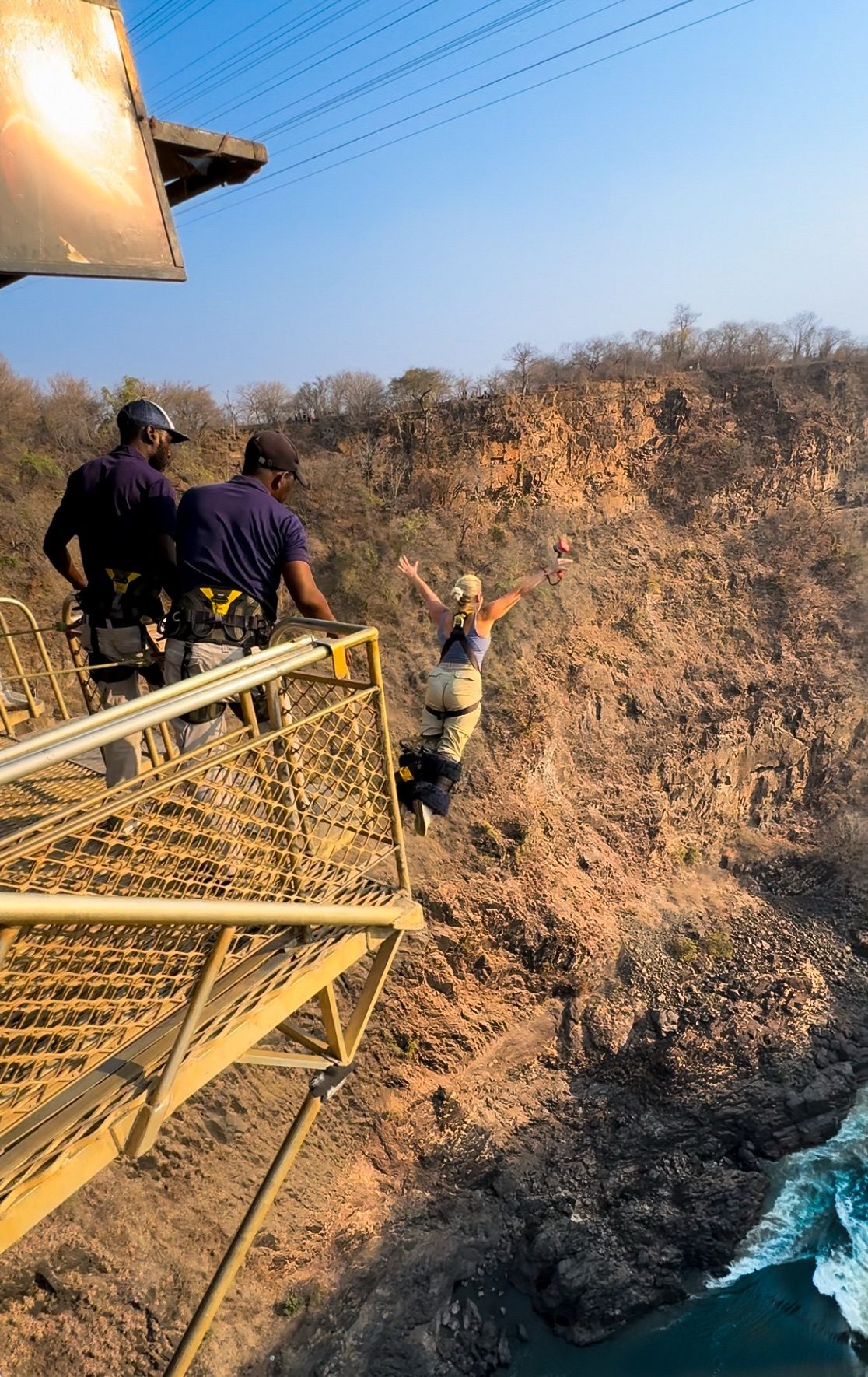
The 111-meter bungee jump from Victoria Falls Bridge ranks among the world's highest commercial jumps, with more than 500,000 completed descents since its 1993 launch. The gorge below the bridge sits directly between Batoka Gorge's sheer basalt walls, with the Zambezi River carving through rapids 111 meters beneath the platform. The victoria falls bungee jump accident of December 2012 stands as the operation's sole documented equipment failure. The jumper, Erin Langworthy, experienced a cord detachment during the rebound phase of her jump. She plunged into the river with the severed cord still attached to her ankles, then swam through Class-V rapids to reach the Zambian riverbank. Her injuries required evacuation to South Africa for treatment, but she recovered fully within months. Independent investigators attributed the failure to a manufacturing defect in the cord's connection point, not operator error or maintenance negligence. The incident prompted immediate operational changes across the industry. Shearwater Adventures introduced a dual-attachment system in which jumpers wear both ankle and body harnesses, with independent cord connections for each. The company replaced its entire cord inventory and instituted daily pre-jump stress testing using calibrated load sensors. Every cord now carries a unique serial number logged against its manufacturing date, jump count, and retirement schedule. Cords are retired after 500 jumps or 18 months of service, whichever comes first. The bridge jump operates daily from 09:00 to 17:00, with jump slots assigned in 30-minute windows. All participants complete a medical screening form and attend a pre-jump safety briefing conducted by a qualified jump master. The Zambezi below the platform remains off-limits to recreational watercraft during operating hours, and a rescue team maintains constant visual contact from both the Zambian and Zimbabwean riverbanks throughout the jump day.
“Independent investigators attributed the 2012 cord failure to a manufacturing defect in the connection point, not operator error or maintenance negligence.”
High-profile incidents are rare but often gain significant media attention, leading to misconceptions regarding the safety standards of the Victoria Falls Bridge bungee operation. Understanding the distinction between isolated events and operational safety protocols clarifies the actual risk profile.
MythThe bungee cord is prone to snapping frequently.
FactThe operation utilizes professional-grade equipment and rigorous maintenance protocols, making cord failures extremely rare occurrences.
MythVictoria Falls bungee jumping has a high accident rate.
FactStatistically, the operation maintains a safety record consistent with international standards for commercial bungee jumping activities.
MythAn accident means the entire operation is unsafe.
FactSafety protocols are reviewed and updated after every incident to ensure ongoing risk management and compliance with international safety regulations.
Following a Victoria Falls bungee jump accident concern, strict adherence to operator protocols and medical disclosure requirements protects both you and the operation. These rules exist to maintain the safety record established over decades.
The Victoria Falls Bridge is accessible daily for bungee jumping and sightseeing activities. Operations run consistently throughout the week.
The Victoria Falls Bridge is located within the No Man's Land border zone between Zimbabwe and Zambia. Visitors must clear immigration at either the Zimbabwean or Zambian border post to reach the bridge.
Direct transfer from Victoria Falls town or Livingstone
Drive via A8 (Zimbabwe) or T1 (Zambia) to the border post
Walk from the Zimbabwe or Zambia border control points
You must carry your original passport to access the bridge, as it is situated in a restricted border zone. The best arrival window is 09:00–10:00 to ensure efficient processing through immigration and to secure your place before queues form.
The best arrival window is 09:00–10:00. Mornings offer the best light for photography and typically have fewer queues.
—
Reduced wait times allow for a more efficient experience.
Cool, dry; 10°C to 25°C
Clear skies provide consistent visibility for bridge activities.
Hot, dry; 20°C to 35°C
This period experiences higher visitor volumes due to favorable weather conditions.
Humid, rainy; 15°C to 30°C
Lower tourist density, though seasonal rains may occasionally impact visibility.
Verdict: For the best experience, visit Tuesday to Thursday, arrive at the 09:00 opening, during the drier months of May or September.
Everything you need to know about victoria falls bungee jump accident
Incidents at the bridge are extremely rare, and professional operators maintain high safety standards. The primary focus of the engineering and guide teams is to ensure every jump follows rigorous protocols to prevent any victoria falls bungee jump accident.
The bungee operation has maintained an excellent safety record over decades of activity at this historic landmark. Thousands of individuals participate in the Zambezi River plunge annually without any significant complications.
Rigorous equipment testing and redundant safety systems are used to mitigate the risk of any victoria falls bungee jump accident. Guides conduct multiple harness checks and site assessments before each participant approaches the edge.
Yes, participants must adhere to specific weight restrictions to ensure the equipment functions within its tested parameters. Staff members verify these requirements on-site to maintain safety standards throughout the day.
It is natural to feel apprehensive, but understanding the professional gear and professional expertise can help alleviate concerns regarding a victoria falls bungee jump accident. Many visitors find that speaking with the experienced crew provides the reassurance needed to complete their jump.
While it involves a significant freefall, the bridge bungee is classified as a regulated adventure activity rather than a dangerous stunt. It remains one of the most popular attractions for those seeking thrills at this iconic border location.
All equipment is subject to strict maintenance schedules and daily inspections to avoid technical faults. In the unlikely event of an issue, backup carabiners and recovery systems are in place to ensure participant safety.
While operators prioritize safety, having personal travel insurance is always recommended for any adventure activity. Check that your specific policy covers extreme sports and high-altitude bridge activities before your visit.